 EN
EN

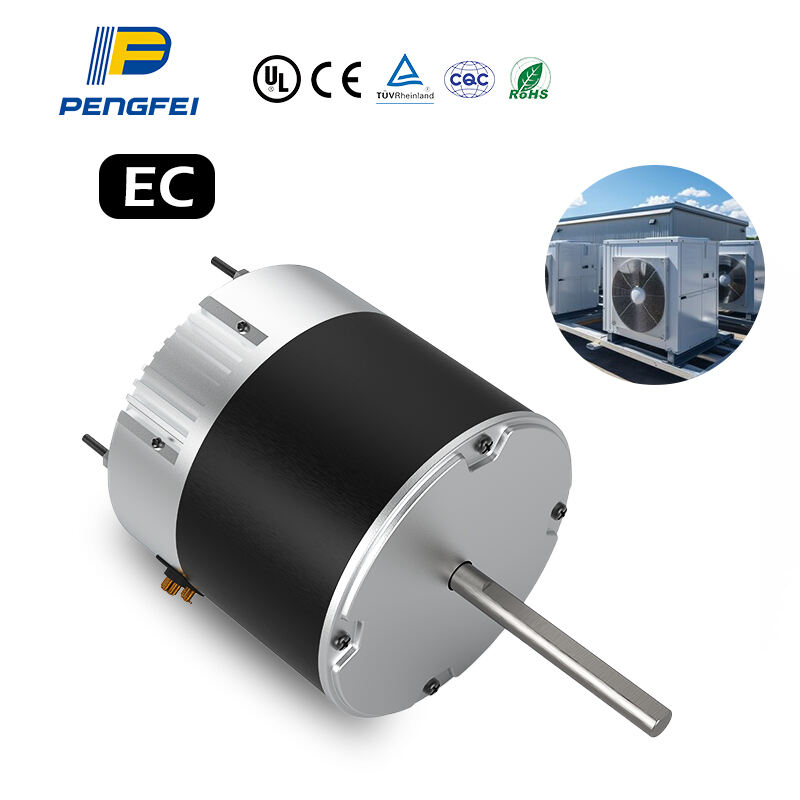
Why DC Fan Motors Excel in Low-Noise Home Applications
Brushless Commutation and Reduced Mechanical Vibration
DC fan motors work differently from traditional ones because they use brushless commutation instead of those old carbon brushes. They switch electronically which means there's no friction wear or those annoying torque ripples we see in brushed motors. The result? Much smoother power delivery throughout operation. According to tests following IEC 60034-1 standards, these motors cut down on mechanical vibrations anywhere between 60% to even 75%. Less vibration translates into significantly quieter operation too. Some models can run at under 25 decibels A-weighted sound level, making them ideal for places where noise matters most like bedrooms or home offices. For those looking for extra quietness, EC versions take things one step further. These include permanent magnets along with smart digital controllers that actually tackle those pesky harmonics causing that annoying buzzing sound people often complain about in regular fans.
Measured Performance: DC vs. AC Fan Motors — dBA Reductions in Real Residential Settings
Tests in actual homes show that DC fan motors tend to be much quieter than their AC counterparts. When running under normal conditions, these DC systems can cut noise levels by around 4 to 8 decibels. Why? Three main reasons stand out. First, they have better speed control which means no annoying start-stop cycling like what happens with AC motors. Second, they suppress those annoying resonance frequencies through something called PWM operation. And third, they eliminate that electromagnetic buzz caused by brush arcing and magnetic saturation issues. Even when running at super low power levels, like during sleep mode on an air purifier, DC motors still manage decent airflow below 19 dBA, which is almost at the edge of what humans can hear. Plus, they do all this while consuming about 40% less electricity compared to similar AC models. Makes sense why so many manufacturers are making the switch these days.
Energy Efficiency and Intelligent Speed Control for Home Use
IEC-Verified Efficiency Gains: 30—50% Lower Power Consumption at Partial Load
In homes across the country, DC fan motors are proving to be much more efficient than older models, particularly when running at partial loads which happens about 80% of the time for most household appliances. According to tests done by international standards organizations, these modern motors actually use around 30 to maybe even 50 percent less power compared to traditional AC motors when they're handling the same workload. Why? Well, there are several reasons behind this improvement. They naturally create fewer electromagnetic losses, have better designed copper windings inside them, and don't pull as much current when sitting idle. When we look at what this means for everyday families, each unit can save between forty five dollars and seventy five bucks on electricity bills every year. That's pretty impressive considering how many different devices run on fans throughout a home.
Demand-Based Airflow Without Noise Penalty: How Smart PWM Control Preserves Acoustic Benefits
PWM technology allows for much finer control over DC fan motor speeds without making them noisy. Traditional voltage methods actually mess with torque stability and often cause problems like stalling or strange vibrations when running slow. With PWM, the motor gets quick bursts of power at high frequencies, maintaining its magnetic strength throughout. This means smoother operation overall and no annoying hums or buzzes that people hate in their AC units. For those late night hours when everyone is asleep, this lets HVAC systems adjust airflow exactly as needed while keeping things quiet enough so nobody gets disturbed. According to recent studies published by ASHRAE last year, these PWM controlled motors save around 30 to 40 percent on energy costs when dealing with changing loads. And best part? They do all this without getting louder, which makes them perfect for modern homes where both comfort and good sleep matter a lot.
Proven Integration Across Key Home Appliances
Refrigerators: Enhanced Cooling Uniformity and ENERGY STAR Compliance
These days, many modern fridges are switching to DC fan motors because they tackle temperature stratification, something that has been a real headache for traditional fridge designs. The DC motors work by moving air steadily throughout the evaporator coils and inside areas, which means everything stays cool evenly. No more spots getting too cold while others stay warm. This kind of precise temperature control helps manufacturers meet those tough new 2023 ENERGY STAR standards. And guess what? Those variable speed controls actually cut down on wasted energy quite a bit. Some independent research indicates that premium fridge models using these DC motors can save over 15% in energy compared to older AC motor versions. Plus, they still perform reliably and keep food at consistent temperatures, so nobody loses out on quality or convenience.
Air Purifiers and HVAC Fans: Enabling Ultra-Quiet Night Mode Operation
DC fan motors really shine when it comes to quiet operation, especially in appliances placed in bedrooms. Take air purifiers and those ducted HVAC systems for instance. The combination of brushless commutation technology and PWM integration lets these devices run at around 25 dBA or lower at night, which matches typical background noise levels in a room. What engineers have done here goes beyond just eliminating mechanical noises from friction points. They've actually worked on fine-tuning the motor control software alongside specially designed fan blades that cut down turbulence. This means people can enjoy constant air cleaning or temperature regulation while sleeping through the night without being disturbed by any noticeable sounds. And let's face it, this quiet performance hits a sweet spot with today's consumers who want their homes to be both healthy spaces and peaceful retreats.
Critical Design Factors for Reliable, Low-Noise DC Fan Motor Deployment
Achieving durable, whisper-quiet performance in DC fan motors requires tight integration across three interdependent engineering domains.
First, precision electromagnetic design minimizes cogging torque and magnetic asymmetry—the leading causes of vibration and tonal noise. EC motor architectures eliminate brush contact entirely, while features like skewed stator slots and sinusoidal back-EMF waveforms reduce harmonic distortion and associated acoustic emissions.
Second, the system incorporates advanced vibration damping techniques that include dynamically balanced rotors, along with those special rubber-like motor mounts and fan blades designed using computational fluid dynamics. All these components team up to soak up leftover mechanical energy before it can cause problems. They also stop structural vibrations from getting worse and turning into annoying noises people can hear. The fan blades themselves are shaped in a way that makes air flow smoothly rather than creating turbulence. This smooth airflow prevents those high-pitched hissing sounds that come from areas where air separates unpredictably as it moves through the system.
Thermal resilient materials like PPS thermoplastic housing keep their shape even when temperatures fluctuate wildly. This is really important because it maintains those crucial spaces between the rotor and stator components. Without proper spacing, things can start rubbing against each other, causing annoying scraping sounds or strange noises when running at slow speeds for long periods. All these design considerations work together to allow quiet operation below 25 decibels in tough residential settings. The result? Longer lasting equipment that doesn't need constant attention since there's just less wear and tear on moving parts over time.
FAQ
What makes DC fan motors quieter than traditional AC motors?
DC fan motors use brushless commutation instead of carbon brushes, reducing friction wear and mechanical vibrations. They also employ PWM operation to suppress resonance frequencies and eliminate electromagnetic buzz.
How do DC fan motors achieve energy efficiency?
DC fan motors consume significantly less power due to better speed control, fewer electromagnetic losses, and improved copper windings. These factors contribute to a reduction in electricity bills for households.
Why are DC fan motors preferred in home appliances?
DC fan motors offer quieter operation, energy efficiency, and precise temperature control, making them ideal for home appliances like refrigerators, air purifiers, and HVAC systems.