 EN
EN

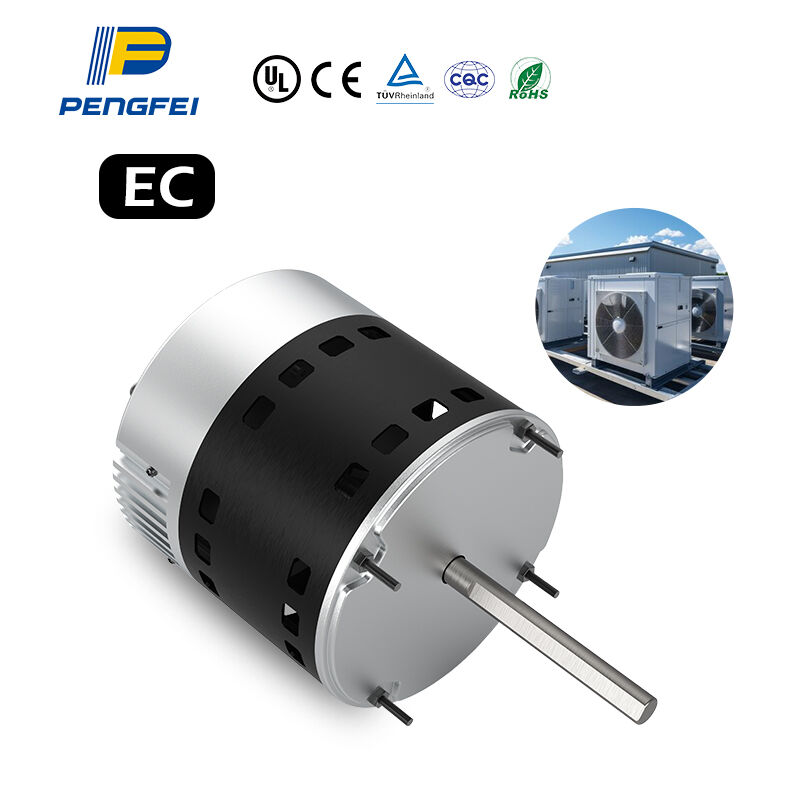
How Condenser Fan Motors Enable Efficient Heat Rejection in Heat Pumps
Thermodynamic Role: Facilitating Refrigerant-to-Air Heat Transfer in the Condenser Coil
The condenser fan motor pushes air over the condenser coil, which helps get rid of heat from the compressed refrigerant into the outside air. When high pressure vapor comes into contact with the coil, the spinning motor creates convection that cools down the refrigerant around 14 degrees Celsius (about 25 Fahrenheit), all while keeping the right pressure balance. What happens next is pretty interesting too: as the refrigerant changes from vapor back to liquid form, it actually releases the heat it picked up inside the house. And here's something important: how fast the fan spins makes a big difference in how well this heat swapping works. If the motor fails and there's not enough airflow, problems start popping up like refrigerant getting too cold and even potential damage to the compressor itself. That's why proper functioning of this component is so crucial for the whole system to work correctly.
Impact on System Efficiency: Quantifying COP Improvements Through Optimized Airflow and Static Pressure Management
Properly sized condenser fan motors elevate heat pump efficiency by ensuring precise airflow-to-refrigerant mass flow ratios. Field studies show that matching motor RPM to coil design specifications:
- Reduces compressor lift requirements by 18–22%
- Improves system COP by up to 15% through minimized temperature glide
- Prevents static pressure losses exceeding 0.2 in. wg that degrade heat transfer
Optimized motors maintain consistent air velocity across condenser fins, eliminating hot spots that waste 7–12% of rejected energy in undersized units. This airflow management directly translates to lower kilowatt-hour consumption during peak cooling loads.
PSC vs ECM Condenser Fan Motors: Energy, Control, and Reliability Trade-offs
Performance Comparison: Torque Response, Power Factor, and Low-Load Stability Under Real-World Conditions
PSC motors run at constant speeds which leads to problems with airflow stability whenever there are changes in static pressure. These motors have pretty poor power factors around 0.6 to 0.7, meaning they waste quite a bit of energy because of those reactive losses. When operating below full load, these motors tend to either stall out completely or get too hot since they just don't respond well enough to maintain proper torque levels. On the other hand, ECMs work differently. They use microprocessors to constantly tweak the torque output as needed. What this means is much better airflow consistency, usually within plus or minus 5 percent, even when pressures vary throughout the system. Plus, their power factors are way better, sitting close to unity at 0.95 or higher so less energy gets wasted overall. Another big plus for ECMs is that they completely eliminate those nasty startup surges we see with traditional motors. The gradual ramp up to speed actually cuts down on bearing wear by about forty percent compared to older technology that jumps straight into full speed from a dead stop.
Energy Savings Data: ECMs Reduce Partial-Load Power Consumption by 40–65% (Per AHRI 210/240 Testing)
According to standard AHRI 210/240 tests, ECM condenser fan motors can slash partial load energy consumption by somewhere between 40 to 65 percent compared to traditional PSC motors. The reason for this improved efficiency? Well, ECM technology allows these motors to adjust their speed based on actual heat rejection needs as they happen. Unlike PSC motors that just keep running at full blast no matter what the load is, ECM motors only draw the power they actually need. This typically means saving around 300 to 500 watts on average for most residential heat pump systems. Real world data from field studies indicates these savings translate into lower annual operating costs of approximately $80 to $120 per unit. For homeowners living in areas where cooling demands are high throughout the year, this usually pays off the extra cost of ECM motors within 18 to 30 months after installation.
Critical Selection and Replacement Criteria for Condenser Fan Motors
Must-Verify Specifications: RPM, Voltage, Rotation Direction, Shaft Dimensions, and Mounting Compatibility
When it comes to picking out or swapping a condenser fan motor, there are five key specs that need checking off the list to keep things running smoothly. Let's start with RPM compatibility. Most standard motors run around 1075 rpm, though some variations exist. Getting this wrong can throw off the whole airflow balance in the system. Next up is voltage matching. The motor needs to work with whatever control circuit it's connected to whether that's 115V, 208V, or 230V. A mismatch here usually leads to electrical problems down the road. Rotation direction matters too clockwise versus counterclockwise determines where the air actually goes. Install it backwards and the heat won't reject properly, which defeats the whole purpose. Shaft size is another important factor. Both length and diameter have to fit perfectly with the fan blade hub. If they don't match up, expect vibrations and premature wear on bearings over time. Lastly, check how the motor mounts. Different bracket types and bolt patterns mean different installation requirements. Skipping any of these checks can lead to anywhere between 30% and 50% loss in efficiency because of disrupted airflow, plus motors tend to fail faster when installed incorrectly especially if they're operating in dusty or humid conditions. Before buying anything new, always double check those specs against what the original equipment manufacturer recommends.
Smart Airflow Optimization: Variable-Speed Control and Aerodynamic Integration
ECM-Based VSDs Dynamically Match Condenser Fan Motor Speed to Heat Load and Ambient Temperature
ECMs paired with VSDs adjust condenser fan motor speeds constantly depending on what's happening with heat loads and outside temps. The system basically keeps refrigerant pressures where they need to be, cranking up airflow when cooling demands hit their peak and backing off when things cool down a bit. Real world testing has shown these variable speed setups can cut energy consumption anywhere from 30 to 50 percent over traditional fixed speed motors simply because they stop running fans unnecessarily. Getting those speeds just right means compressors don't cycle as much, which prolongs equipment lifespan and keeps COP numbers steady even when environmental conditions change. Better blade shapes and improved shroud design help cut down on turbulence problems that create extra static pressure loss. When we combine responsive motor control with smart airflow engineering, heat pumps actually manage to reject heat more effectively no matter what kind of weather conditions they face.
FAQ
What is the main function of a condenser fan motor in a heat pump?
The condenser fan motor pushes air over the condenser coil, facilitating the transfer of heat from the compressed refrigerant into the outside air, thereby enabling efficient heat rejection.
How do ECM motors improve energy efficiency compared to PSC motors?
ECM motors use microprocessors to dynamically adjust torque output as needed, resulting in better airflow consistency and higher power factors, which significantly reduce energy wastage compared to PSC motors.
What specifications are critical when selecting or replacing a condenser fan motor?
Key specifications include RPM compatibility, voltage matching, rotation direction, shaft dimensions, and mounting compatibility. Ensuring these are correctly matched prevents efficiency loss and potential motor failures.