 EN
EN
Thermal Management: How Insulation Class and Heat Dissipation Define Table Fan Motor Lifespan
Insulation Class Ratings (B, F, H) and Their Real-World Impact on Continuous-Duty Endurance
Insulation class ratings define a table fan motor’s thermal ceiling—the maximum winding temperature it can sustain without accelerated degradation. Class B (130°C), F (155°C), and H (180°C) reflect progressively higher thermal resilience. Crucially, every 10°C above its rated limit halves motor lifespan, per IEEE Std 112 and IEC 60034-1. Class H insulation—common in industrial-grade motors—supports 30,000+ hours of continuous operation when thermally managed, while Class B is adequate for intermittent residential use but degrades rapidly under sustained load or ambient heat. Higher classes alone don’t guarantee longevity; they require complementary thermal design to prevent insulation embrittlement, carbonization, and eventual short-circuit failure.
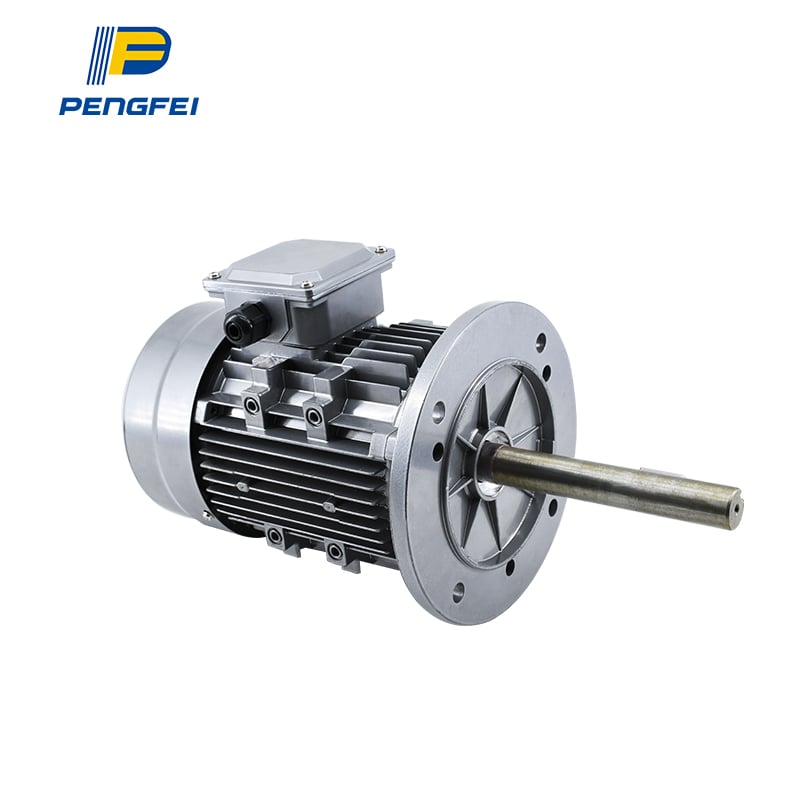
Effective Heat Dissipation Strategies: Fins, Airflow Pathways, and Thermally Conductive Housing in Table Fan Motor Design
Sustained motor life hinges not just on insulation rating—but on keeping windings well below that limit. Three interdependent strategies achieve this in durable table fan motors:
- Extruded aluminum fins, increasing surface area by 40–60%, accelerate convective cooling
- Laminar airflow pathways, engineered to direct intake air across hotspots like windings and stator cores
- Die-cast aluminum housings, which conduct heat five times faster than plastic alternatives
| Strategy | Temperature Reduction | Impact on Lifespan |
|---|---|---|
| Finned motor body | 12–18°C | 2.2× longer operation |
| Optimized airflow | 8–14°C | 1.8× longer operation |
| Conductive housing | 10–15°C | 2.0× longer operation |
Used together, these features maintain operating temperatures 25–35°C below critical thresholds—preserving lubricant integrity, preventing winding oxidation, and extending service life across thousands of continuous hours.
Bearing Systems and Lubrication: Critical Mechanical Factors for Reliable Table Fan Motor Operation
Ball vs. Sleeve Bearings: Performance Trade-offs for Noise, Load Handling, and 10,000+ Hour Durability
Ball bearings excel in high-vibration table fan applications due to superior axial and radial load capacity—critical for long-term stability at speed. Though they generate 5–8 dB more noise than sleeve (bushing) bearings, their sealed variants reduce contamination risk by 78% compared to open-sleeve designs. Sleeve bearings offer quieter operation but demand precise lubrication control and tight thermal management: mismatched expansion between aluminum housings and steel bearing races becomes a failure trigger above 40°C ambient.
Lubricant Stability and Sealed Bearing Design Under Long-Term, Uninterrupted Table Fan Motor Duty Cycles
Longevity depends as much on lubricant chemistry as mechanical fit. Synthetic oils and lithium-complex greases retain stable viscosity from –20°C to 150°C, resisting centrifugal separation at high RPM. Unsealed bearings lose lubricant integrity in under six months during continuous operation—leading to rapid wear. In contrast, labyrinth-sealed units sustain performance for three years or more. Grease degradation accounts for 64% of bearing failures under thermal stress; double-sealed designs extend relubrication intervals fourfold versus single-shield variants, while high-purity base oils cut sludge formation by 90% in dusty environments. When paired with thermally conductive housings, stable lubricants reduce thermal runaway risk by 32%.
BLDC vs. AC Table Fan Motors: A Durability Comparison Based on Failure Mode Evidence
AC Motor Failure Drivers: Brush Wear, Commutator Degradation, and Thermal Runaway (68% of Field Returns)
AC table fan motors face inherent durability limits rooted in mechanical commutation. Brushes contacting rotating commutators wear progressively, increasing electrical resistance and generating heat and conductive carbon dust. This accelerates pitting, arcing, and eventual brush disintegration—primary causes behind 68% of field returns, per aggregated service data from major OEMs. Without robust thermal safeguards, rising resistance compounds heat buildup, triggering thermal runaway that compromises insulation and winding integrity—especially in enclosed or high-ambient settings.
BLDC Advantages: Elimination of Mechanical Wear, Integrated Thermal Protection, and Superior Cycling Resilience
Brushless DC (BLDC) motors eliminate the core failure mode of AC designs: no brushes, no commutator, no friction-based wear. Electronic commutation removes arcing, voltage spikes, and carbon accumulation—dramatically improving reliability. Integrated thermal sensors monitor winding temperature in real time, automatically reducing speed or shutting down before damage occurs. This active protection is especially valuable during extended operation or in poorly ventilated spaces. BLDC motors also handle frequent start-stop cycles far more gracefully: independent endurance testing confirms they withstand three times as many on/off cycles as equivalent AC motors before measurable performance decline.
FAQ
What are insulation class ratings in table fan motors?
Insulation class ratings (B, F, H) indicate the maximum temperature a motor winding can withstand without degrading. Higher ratings imply higher thermal resilience, but effective thermal management is crucial for longevity.
How can heat dissipation affect the lifespan of table fan motors?
Efficient heat dissipation via fins, airflow pathways, and conductive housings helps maintain motor temperatures below critical thresholds, preserving lubricant integrity and preventing winding oxidation, thus extending the motor lifespan.
What are the advantages of BLDC motors over AC motors?
BLDC motors eliminate mechanical wear-related failures inherent in AC motors due to the absence of brushes and commutators. They provide better reliability through integrated thermal protection and enhanced cycling resilience.