 EN
EN

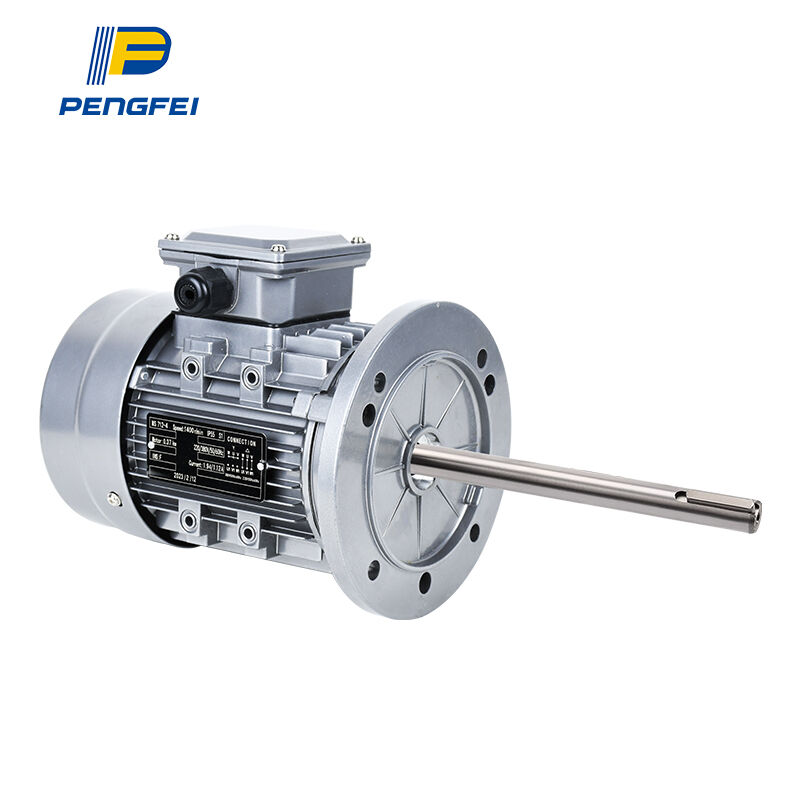
Global Fan Motor Efficiency Standards and Regulatory Frameworks
IEC 60034-30-1, EU 2019/1781, and GB 18613: Comparing IE Classes (IE1–IE5) for Fan Motors
International efficiency standards establish a unified global benchmark for fan motor performance. IEC 60034-30-1 defines the International Efficiency (IE) classification system—spanning IE1 to IE5—with IE5 representing ultra-premium efficiency. The EU’s Ecodesign Regulation (EU) 2019/1781 mandates minimum IE3 efficiency for most general-purpose motors and IE4 for specific higher-power or variable-speed applications. China’s GB 18613-2020 fully harmonizes with IEC 60034-30-1, adopting identical IE thresholds and test methods. These regulations drive innovation by phasing out lower-efficiency technologies, with each IE class upgrade delivering typical energy savings of 2–8% under standardized test conditions. Compliance is verified through ISO/IEC 17025-accredited testing per IEC 60034-2-1 and IEC 60034-2-3 protocols—ensuring claims reflect repeatable, laboratory-validated performance.
U.S. Requirements: DOE 10 CFR Part 431 and IECC/ASHRAE 90.1 Implications for Fan Motor Procurement
In the U.S., the Department of Energy’s 10 CFR Part 431 mandates IE3 minimum efficiency for most industrial fan motors above 1 hp, effective since 2015. While federal rules govern motor-level compliance, building energy codes—including the International Energy Conservation Code (IECC) and ASHRAE Standard 90.1—extend requirements to system-level performance. These codes require Fan Energy Index (FEI) reporting and set maximum allowable FEI values for fans in commercial HVAC applications. As a result, procurement decisions must now validate both motor certification (e.g., DOE-listed IE3/IE4 status) and full-system FEI compliance—especially when integrating variable-speed drives (VSDs). Non-compliant equipment may be excluded from projects subject to code enforcement, and retroactive non-conformance can trigger costly rework or penalties. Early alignment with these dual-layer requirements—motor + system—is critical during specification and design review.
Beyond the Motor: Fan Energy Index (FEI) and System-Level Efficiency Measurement
Why FEI Matters More Than IE Alone — Quantifying Total Fan-Motor System Performance
Motor efficiency ratings (IE1–IE5) measure only electrical-to-mechanical conversion losses—yet motors account for just 40–60% of total energy consumption in a fan system. The Fan Energy Index (FEI), defined in ANSI/AMCA 214–22 and referenced in ASHRAE 90.1–2022, evaluates “wire-to-air” performance across the entire integrated system: motor, drive, transmission, and aerodynamic components. This holistic metric reveals how component interactions affect real-world outcomes—for example:
- An IE5 motor paired with a poorly matched impeller or inefficient belt drive can deliver lower overall efficiency than an IE3 motor in an optimized, FEI-validated system.
- FEI values >1.0 indicate superior field performance; per AMCA 2021 guidance, each 0.10 increase in FEI corresponds to ~10% reduction in annual energy use at typical operating points.
Field studies confirm FEI’s predictive value: systems selected using FEI achieve 15–30% higher operational efficiency than those chosen solely on IE class—making FEI the de facto standard for performance-based specification in high-efficiency commercial and institutional projects.
How ISO 12759 and IEC 60034-2-1 Testing Reveal Real-World Fan Motor Efficiency Gaps
Standardized testing frameworks expose critical limitations of isolated motor ratings. ISO 12759 (fan system efficiency) and IEC 60034-2-1 (motor loss measurement) quantify how real-world variables degrade theoretical performance. Key findings include:
- System-level losses: VFD harmonic distortion, belt slippage, coupling misalignment, and airflow turbulence collectively reduce efficiency by 8–15% beyond motor-rated losses.
- Dynamic load sensitivity: Efficiency can drop up to 25% when fans operate outside their optimal static pressure range—even with IE5 motors—due to aerodynamic stall and off-peak motor loading.
A 2023 field study of 200 installed HVAC fan systems found that units certified to IE5 delivered only 84% of rated efficiency on average, while FEI-optimized systems maintained 92–95% of nameplate performance. This gap arises because IE testing excludes voltage fluctuations, partial-load operation, and ambient thermal effects—all addressed in FEI’s application-specific evaluation. Consequently, forward-looking engineers prioritize FEI-compliant designs not as an alternative to high-IE motors, but as the essential framework for validating integrated efficiency.
Optimizing Fan Motor Efficiency Through Integration and Control
VSD Integration with Fan Motors: Cutting Energy Use by Up to 50% in Variable-Load Applications
Variable Speed Drives (VSDs) unlock the largest single opportunity for fan energy reduction—particularly where loads fluctuate significantly, such as HVAC ventilation, process exhaust, or cooling towers. Unlike fixed-speed motors paired with throttling dampers or bypass lines, VSDs adjust motor speed to match real-time airflow demand. Per the affinity laws, reducing centrifugal fan speed by 20% cuts power consumption by nearly 50%. Field data from the U.S. DOE and PG&E demonstrate consistent 30–50% energy savings in variable-torque applications when VSDs are correctly applied and commissioned. Beyond energy gains, properly sized VSDs reduce mechanical stress—eliminating high-inrush current and abrupt torque transients—which extends motor and bearing life. Optimal integration requires matching VSD voltage/current profiles and carrier frequency settings to motor insulation class and thermal design to prevent premature winding degradation or harmonic-induced overheating.
Loss Breakdown: Motor, Drive, and Fan Interactions That Erase IE Rating Benefits
High IE-class motors rarely deliver nameplate savings in practice due to compounding system inefficiencies. Core losses (hysteresis and eddy currents) and copper losses persist even in IE5 designs, while VSDs introduce switching losses (2–5%) and harmonic distortion that elevate motor temperature and reduce effective output. Crucially, aerodynamic mismatch—such as suboptimal blade geometry, inlet turbulence, or poor housing design—creates parasitic loads that force the motor to operate continuously outside its peak efficiency zone. For instance, an impeller mismatched to system resistance can increase power draw by 15–20%, negating much of an IE5 motor’s advantage. These interdependent losses mean that optimizing one component in isolation yields diminishing returns. True system optimization demands coordinated mitigation: passive harmonic filters or active front-end VSDs reduce electrical losses; computational fluid dynamics (CFD)-informed fan redesign minimizes aerodynamic waste; and integrated control logic ensures motors operate within their highest-efficiency RPM and torque bands.
Practical Fan Motor Selection and Sizing for Energy-Critical Applications
Selecting the optimal fan motor requires precision—not just efficiency class. Undersizing strains the motor, accelerating insulation degradation and increasing failure risk; oversizing wastes energy, with studies showing oversized motors in ventilation systems can inflate operational costs by up to 30% due to low-load inefficiency and excess reactive power draw. Prioritize motors engineered for continuous duty in your specific environment—e.g., TEFC enclosures for dusty industrial settings or IP55+ ratings for humid HVAC air handlers—as thermal management directly determines service life. Critically, pair IE ratings with real-world validation: U.S. DOE research confirms that proper sizing and system integration deliver 10–20% greater efficiency gains than upgrading motor efficiency class alone. For energy-critical applications, always size using manufacturer-provided performance curves—not rule-of-thumb margins—and verify compatibility with VSDs where load variability exceeds 30%. This dual focus—on accurate capacity matching and verified system-level efficiency—maximizes both reliability and lifetime energy savings.
FAQ
What are the efficiency standards for fan motors?
Efficiency standards for fan motors are defined globally by regulations such as IEC 60034-30-1, which classifies motors from IE1 to IE5, and regional standards such as the EU 2019/1781 and China's GB 18613-2020, which align with international norms.
How does the Fan Energy Index (FEI) differ from IE classifications?
While IE classifications measure only the motor's conversion efficiency, the Fan Energy Index (FEI) evaluates the entire fan-motor system's performance, including factors like motor drive transmission and aerodynamic components, providing a more complete efficiency picture.
Why is the integration of Variable Speed Drives (VSDs) important for fan motors?
Integrating VSDs with fan motors is essential for significant energy reduction, especially in variable-load applications, as it allows motor speed adjustments in real-time, reducing mechanical stress and enhancing energy efficiency.
What should be considered when selecting a fan motor?
When selecting a fan motor, prioritize precise sizing rather than just efficiency class, consider the motor's duty environment, and validate with real-world integration to ensure optimal performance and energy savings.