 EN
EN

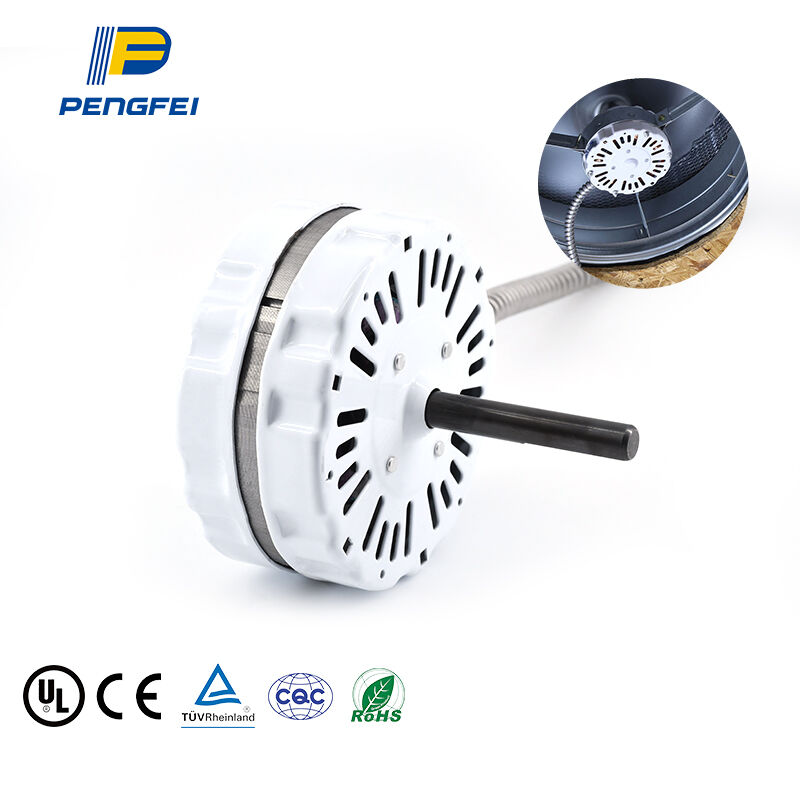
Why Quiet Operation Matters: Human Comfort and Environmental Requirements for Electric Fan Motors
Decibel Thresholds for Sleep, Concentration, and Recovery in Homes, Offices, and Healthcare Facilities
When noise stays consistently above 35 decibels A-weighted, it messes with how we sleep and can cut REM cycles by anywhere from 20 to 40 percent, which means people aren't getting the deep rest they need for recovery. Offices aren't immune either. Studies show that when office noise goes over 45 dB(A), workers' thinking abilities drop around 18%. We've seen this pattern repeated time after time in workplace productivity research. Hospitals take this seriously too. Intensive care units have strict rules requiring ambient noise below 30 dB(A). Doctors actually found patients recover about 27% faster when these quiet conditions are maintained. All these numbers point to something engineers should pay attention to: electric fan motors need careful design so they don't create vibrations or airborne sounds that interfere with both our bodies and the environments where these systems operate daily.
The Limitations of Marketing Claims: Why 'Whisper-Quiet' Needs Contextual Acoustic Benchmarks
Terms like "whisper quiet" don't really tell us much unless there's some standard way to measure them. When we actually test residential fans that claim to be super quiet, they can differ quite a bit in noise levels - sometimes as much as 15 dB(A). To put that into perspective, imagine the sound of a refrigerator running at around 50 dB compared to gentle rain falling at about 35 dB. For anyone wanting to know what works well, there are three main things to look for: checking the whole range of sounds from low rumbles to high pitches (20 Hz to 20 kHz), getting independent tests done according to standards like ISO 3744, and seeing how the fan performs under actual conditions. Some hospitals have upgraded their ventilation systems to run at just 27 dB(A), showing that real numbers matter more than catchy phrases when making choices. If people skip these details, they might end up buying fans that go over 50 dB(A), which studies show can actually raise stress hormones like cortisol and adrenaline by about a third. That's not something most folks consider when shopping for quieter equipment.
Engineering Breakthroughs That Enable Low-Noise Electric Fan Motors
Brushless DC (BLDC) Motors: Eliminating Commutation Noise and Reducing Electromagnetic Hum by 40–60%
The move to Brushless DC (BLDC) motors marks a real turning point in designing quieter electric fans. These motors swap out traditional mechanical brushes for electronic commutation systems. This change gets rid of all that annoying brush friction which is actually what causes most of the noise during commutation. Plus, BLDC motors cut down on electromagnetic hum by somewhere between 40 and 60 percent because they can control magnetic fields so precisely. When running at their lowest levels, these motors operate around 20 dB(A) which sounds about as loud as someone whispering right next to you. They also do a much better job converting electricity into actual airflow instead of wasting energy as heat or vibration. The result? Motor lifespan increases by more than half when compared to regular AC motors. And when manufacturers combine this with better coil windings and smarter control software, they basically eliminate harmonic distortion before it even starts. That's why hospitals, libraries, and other places where people need peace and quiet rely heavily on BLDC technology for their ventilation needs.
Precision Rotor Balancing, Vibration-Dampening Mounts, and Aerodynamic Blade-Motor Integration
Three interdependent mechanical innovations drive further noise reduction:
- Precision rotor balancing, calibrated to tolerances under 0.1g/mm, corrects mass asymmetry at the source to prevent vibration amplification
- Vibration-dampening mounts, using rubber or composite isolators, absorb residual oscillations before transmission to enclosures or building structures
- Aerodynamic blade-motor integration, including serrated blade tips and curvature-aligned torque delivery, cuts turbulence-induced “whooshing” by 12–18 dB without sacrificing airflow efficiency
These strategies operate synergistically: hollow composite shafts, for example, dampen vibrations by 30% while reducing rotational inertia. When layered atop BLDC platforms, they deliver holistic acoustic suppression—proving that ultra-quiet operation need not come at the expense of thermal or ventilation performance.
Validating Performance: Real-World Applications of Quiet Electric Fan Motors
Healthcare Environments: ICU Ventilation Upgrades Achieving 27 dB(A) Operation Without Compromising Airflow
Inside intensive care units, noise levels really matter when patients need to heal properly. The new generation of electric fan motors can run at just 27 dB(A), which is actually quieter than someone whispering across the room, yet they still manage to keep proper air circulation going. These upgraded systems fall well within OSHA guidelines that suggest keeping noise below 35 dB in areas where people are recovering medically. Plus, they get rid of that annoying electromagnetic buzzing sound through special vibration control technology. Hospitals that have installed these systems report noticeable improvements in patient comfort and faster recovery times according to their staff observations.
- 40% fewer documented sleep disturbances among patients in respiratory care units
- Consistent airflow velocity of 12 m/s despite radical acoustic reduction
- Resonance-free operation enabled by aerospace-grade dynamic balancing
This performance validates that stringent noise control and uncompromised ventilation are not mutually exclusive—especially when rooted in precision motor engineering and system-level integration.
Residential Use Cases: Bedroom Fans and Smart HVAC Integrations Prioritizing Undisturbed Sleep Cycles
Residential applications demand acoustic discretion without sacrificing intelligence or comfort. Modern bedroom-optimized electric fan motors sustain operation below 25 dB(A)—well under the WHO’s 30 dB threshold for uninterrupted sleep. Key enablers include:
- ECM (Electronically Commutated Motor) platforms with circadian-rhythm-aligned speed modulation
- Vibration-isolated housings that cut structural noise transmission by 60%
- Aerodynamically tuned blades that suppress turbulence frequencies responsible for “whoosh” artifacts
When integrated into smart HVAC systems with occupancy sensing, these motors deliver adaptive nighttime operation—achieving 15% energy savings while maintaining thermal comfort at just 0.3 sones (measured 3 meters from the unit). This ensures continuity of deep and REM-stage sleep, preventing thermal discomfort without acoustic intrusion.
FAQ
Q: What are the advantages of Brushless DC (BLDC) motors in electric fans?
A: BLDC motors eliminate mechanical brush noise, reduce electromagnetic hum by 40–60%, and have a longer lifespan compared to traditional AC motors. They also convert electricity more efficiently into airflow, reducing waste from heat and vibration.
Q: Why is it important for fan motors to operate quietly?
A: Quiet operation is crucial in settings where noise can disrupt sleep, reduce concentration, or impede recovery, such as in homes, offices, and healthcare facilities. It enhances comfort and promotes better health outcomes.
Q: How do vibration-dampening mounts contribute to quieter fan operations?
A: Vibration-dampening mounts absorb oscillations using rubber or composite isolators, preventing noise transmission to building structures and maintaining quiet operation.
Q: What factors should be considered when purchasing a "whisper-quiet" fan?
A: Look for fans tested according to standards like ISO 3744, consider their performance under real conditions, and evaluate their full sound spectrum from 20 Hz to 20 kHz.