 EN
EN

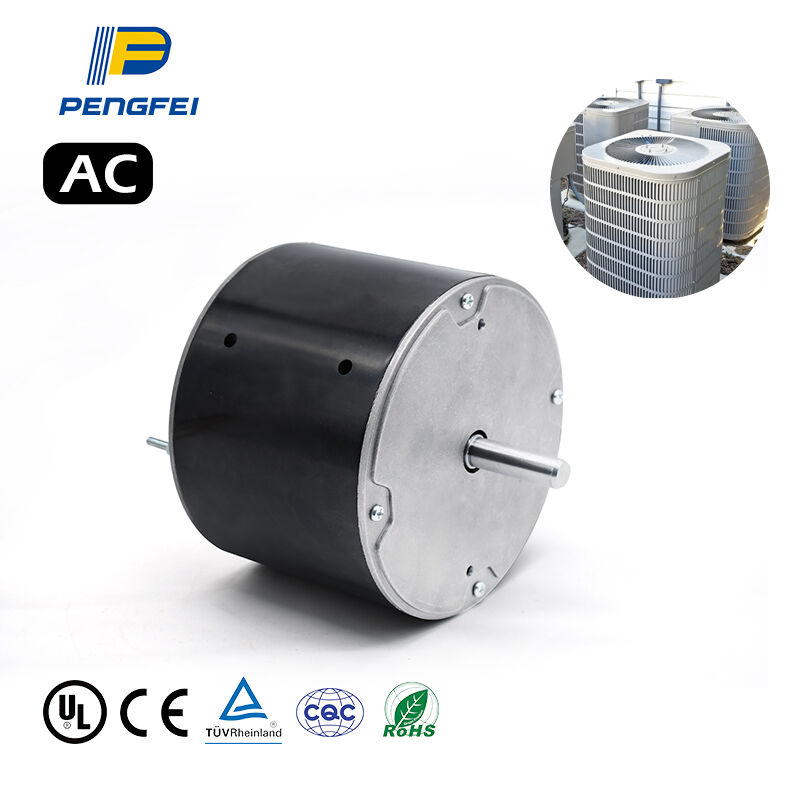
Why Standard Refrigerator Fan Motors Underperform in Large-Capacity Units
Thermal Load Mismatch: When Airflow Falls Short of Volume-Driven Cooling Demand
Most standard fridge fan motors are built for regular sized home fridges around 18 to 25 cubic feet, but they fall short when it comes to those big capacity models over 30 cubic feet. The cooling needs go up as the fridge gets bigger, yet original equipment manufacturer fan motors just don't keep pace with this growth. Small fridges work fine with about 80 cubic feet per minute airflow, but those larger refrigerators need at least 120 CFM to keep everything cool throughout all those spacious compartments. According to various industry reports, motors that aren't powerful enough struggle against the resistance from thick evaporator coils and crowded shelves inside. This creates hot spots and uneven temperature distribution within the fridge. When this happens, the compressor has to work harder and turn on and off more often than necessary. Over time, this leads to extra wear and tear on the system, makes things less efficient overall, and wastes quite a bit of energy especially in commercial settings where these issues really add up.
Real-World Impact: 25% Higher Compressor Runtime in 30+ Cu Ft Units Using OEM Fan Motors
According to field reports from recent industry benchmarks, refrigerators larger than 30 cubic feet tend to run their compressors about 25% longer when they have those standard factory installed fan motors. The constant starting and stopping wears down components faster and increases chances of breakdowns, especially where these big fridges are used nonstop all day long, think restaurant kitchens or behind grocery store counters. Naturally, this means higher electricity bills too since energy usage goes up right along with how much the fridge is working. Installing specially designed high airflow motors instead helps rebalance the whole system. These upgraded motors cut down on how often the compressor needs to kick in, which makes everything last longer and saves money over time without sacrificing performance.
Critical Performance Specifications for a Reliable Refrigerator Fan Motor
CFM, Static Pressure, and Duty Cycle â The Non-Negotiable Triad
Selecting a refrigerator fan motor for large-capacity units requires strict adherence to three interdependent specifications:
- CFM (Cubic Feet per Minute) must meet or exceed 120 to prevent temperature stratification in 30+ cu ft units.
- Static Pressureâmeasured in inches of water column (in. WC)âmust be â¥0.15" WC to ensure airflow penetrates dense coil fins and fully loaded shelves.
- Duty Cycle must be rated for 100% continuous operation; intermittent-rated motors overheat under sustained cooling demands.
Top 3 Commercial-Grade Refrigerator Fan Motors Rated â¥120 CFM @ 0.15" WC
Industrial-grade replacements eliminate thermal compromises in oversized refrigerators:
-
Axial High-Torque Motors
Deliver 140 CFM @ 0.18" WC, featuring dual ball bearings and integrated thermal cutoffsâoptimized for condenser airflow. -
ECM Blower Motors
Maintain 130 CFM across variable speeds while consuming 40% less energy than shaded-pole alternatives. -
Centrifugal Direct-Drive Motors
Sustain 125 CFM at 0.20" WC static pressure, engineered for true 100% continuous duty.
Field testing shows these motors reduce compressor runtime by 18â32%, validating their superiority over OEM solutions in large-volume applications.
Design Innovations That Enable Refrigerator Fan Motor Performance at Scale
Optimized Blade Geometry, Dual-Ball Bearings, and Active Thermal Dissipation
Three engineering advancements make sustained high-CFM performance possible in large-capacity refrigeration:
- Aerodynamically contoured blades reduce turbulence and drag, increasing airflow volume by 18â25% compared to legacy designsâdirectly closing the cubic-footage cooling gap.
- Dual-ball bearing systems replace sleeve bearings to support 70,000+ hour service life, eliminating premature failure in thermally demanding environments.
- Integrated aluminum heat sinks with expanded surface area dissipate heat 40% more effectivelyâcritical because motors in 30+ cu ft units operate at sustained temperatures ~15°C higher than standard models.
Together, these innovations enable consistent 120+ CFM output and support brushless DC motor efficiencies of 85â90%, as verified by independent testing (Pengfei Motor, 2024).
Retrofitting and Compatibility: Installing the Right Refrigerator Fan Motor in Oversized Units
Mounting Flexibility, Voltage Tolerance (115V/230V), and Plug-and-Play Retrofit Paths
Successful integration hinges on three retrofit enablers:
- Mounting flexibility, delivered via universal adjustable brackets that accommodate varied bolt patterns and frame depthsâeliminating cabinet modifications.
- Dual-voltage compatibility (115V/230V), supported by auto-sensing circuitry that removes the need for external transformers across residential and commercial installations.
- Plug-and-play connectors, designed to match OEM wiring harnesses, ensuring error-free installation and reducing replacement time to under 15 minutes.
Crucial Retrofit Factors:
- Mounting Systems: Universal brackets secure motors without drilling or cabinet alterations
- Voltage Handling: Auto-sensing circuitry for 115V/230V input eliminates voltage mismatches
- Connector Standardization: OEM-matched plugs enable error-proof wiring
- Clearance Optimization: Low-profile designs fit confined compressor compartments
These features allow technicians to perform replacements during routine maintenance windowsâavoiding costly system shutdowns while preserving optimal cooling performance in high-capacity refrigeration.
FAQ
Why do standard refrigerator fan motors underperform in large-capacity units?
Standard fan motors are typically designed for smaller fridges. In larger units, they may not provide sufficient airflow, leading to uneven cooling and increased compressor runtime.
What are the key specifications for an efficient refrigerator fan motor?
The key specifications include a minimum of 120 CFM, static pressure of at least 0.15" WC, and a duty cycle suitable for continuous operation.
How can design innovations improve fan motor performance?
Innovations like optimized blade geometry, dual-ball bearings, and improved thermal dissipation help achieve high-CFM performance in large refrigerators.
What are the benefits of installing commercial-grade fan motors in large refrigeration units?
Commercial-grade motors enhance cooling efficiency, decrease compressor runtime by up to 32%, and reduce energy consumption.
Table of Contents
- Why Standard Refrigerator Fan Motors Underperform in Large-Capacity Units
- Critical Performance Specifications for a Reliable Refrigerator Fan Motor
- Design Innovations That Enable Refrigerator Fan Motor Performance at Scale
- Retrofitting and Compatibility: Installing the Right Refrigerator Fan Motor in Oversized Units