 EN
EN

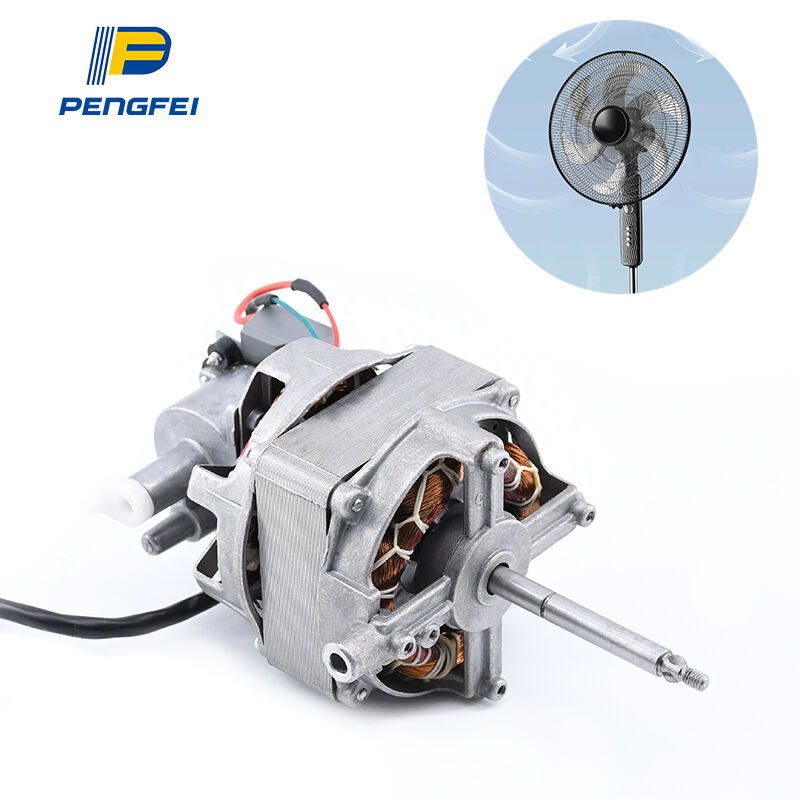
Energy Efficiency and Power Consumption: AC Fan Motor Realities vs. DC Advantages
Energy efficiency is a decisive factor when choosing between AC and DC fan motors. While both technologies serve critical roles, DC motors consistently outperform AC in variable-load and part-load applications—where most real-world HVAC and ventilation systems operate.
How AC Fan Motor Efficiency Compares to DC in Steady-State and Variable-Load Operation
Most modern AC fan motors run pretty efficiently when they're working at full capacity, usually hitting around 60 to 80% efficiency. But things get tricky when these motors aren't running at full power. Efficiency plummets by about 15 to 30% under partial load conditions because of how they're built - they can't adjust speed and suffer from electromagnetic losses when voltage drops. Brushless DC or BLDC motors tell a different story though. These motors keep performing well even when speeds change because they use electronic controls instead of mechanical ones, allowing for much better torque management. The numbers back this up too. Industry tests show that DC fan motors typically use between half and two thirds less energy compared to similar AC models while moving the same amount of air. This makes a huge difference in places where fans need to constantly adjust their speed based on changing conditions.
The System-Level Truth: Why Replacing an AC Fan Motor with DC Doesn’t Always Cut Energy Use
A direct AC-to-DC motor swap rarely delivers projected savings without broader system alignment. Three interdependent factors determine success:
- Compatibility: Retrofitting DC motors into legacy AC airflow systems often introduces aerodynamic and electrical impedance mismatches, eroding potential gains by 10–20%.
- Control Integration: DC motors require compatible variable-speed drives (VSDs) or integrated controllers. Using mismatched or outdated VFDs can eliminate efficiency advantages—or even increase energy use.
- Duty Cycle Alignment: Applications running continuously at full speed—such as industrial exhaust or emergency ventilation—see minimal benefit from DC’s variable-speed capability. Here, a robust, well-maintained AC motor remains more cost-effective and reliable.
Optimal outcomes arise from holistic redesign—not component-level substitution. As ASHRAE Guideline 36 emphasizes, motor selection must align with system hydraulics, control architecture, and operational profiles.
Speed Control, Airflow Flexibility, and Integration Compatibility
AC Fan Motor Speed Limitations vs. DC’s Precise, Wide-Range Variable-Speed Control
AC fan motors basically get limited by the electrical frequency they run on plus their physical construction. For the most part, these motors just have one or maybe two speed settings, and when folks want different airflow levels, they resort to all sorts of inefficient fixes such as adjusting inlet vanes, playing around with outlet dampers, or swapping out pulleys. What happens here is wasted energy because the system restricts airflow only after it has already been created, instead of actually producing what's needed in the first place. DC motors tell a different story though. They can smoothly adjust speed from about 10% up to full power, giving pretty accurate control within roughly 1% either way. This means fans can truly respond to actual needs, cutting down on energy consumption when there's less demand while still keeping things comfortable and maintaining good indoor air quality throughout.
Impact on HVAC and Ventilation System Responsiveness and Zoning Capability
The way DC motors respond makes a real difference in how systems behave overall. These motors can speed up and slow down almost instantly, which means they react quickly when thermostats change settings, occupancy sensors detect people moving around, or CO₂ levels fluctuate. This kind of responsiveness is really important for things like demand controlled ventilation systems these days. The ability to adjust so fast helps create better zoning options too. Airflow gets sent where it's needed most, say into areas that are actually occupied or places generating lots of heat like server rooms, while cutting back on air movement elsewhere in the building. Some actual field tests have found that this targeted approach saves between 15% and maybe even 30% in total energy consumption compared to older fixed speed AC motors that run at constant speeds regardless of what's happening in different parts of the facility.
Operational Reliability, Noise, and Maintenance Requirements
Acoustic Performance and Vibration Profiles: AC Fan Motor Hum vs. DC’s Quieter Operation
Most AC fan motors tend to emit that distinctive low frequency hum we all recognize. The source? Typically those 50/60 Hz electromagnetic forces acting on the stator windings plus torque ripple effects. These vibrations travel right through whatever structures they're mounted on, which is why many installations end up needing extra isolation mounts or acoustic enclosures when placed in sensitive environments such as office buildings, libraries, or hospitals where quiet operation matters most. Brushless DC motors offer a different story altogether. They get rid of mechanical commutation entirely and cut down on harmonics thanks to their sinusoidal current control system. According to recent field tests aligned with ISO standards from 2016, these motors run approximately 15 decibels quieter than traditional models. Plus, the torque delivery is much smoother, reducing structural resonance issues completely and doing away with that annoying brush arcing sound that plagues older motor designs.
Mean Time Between Failures (MTBF), Bearing Wear, and Service Intervals by Motor Type
AC fan motors typically report MTBF ratings of 40,000–60,000 hours—but sustained full-speed operation accelerates bearing wear, demanding lubrication every 12–18 months in industrial settings. BLDC motors exceed 80,000-hour MTBF due to three key advantages:
- Zero brushes or mechanical commutators—removing primary wear points and electrical arcing risks
- Variable-speed operation that reduces mechanical stress and thermal cycling
- Sealed, long-life bearings resistant to dust, moisture, and contaminants
Integrated diagnostics further extend service life: predictive alerts for temperature rise, current anomalies, or imbalance allow maintenance to be scheduled proactively—extending intervals to 3–5 years, versus 1–2 years for comparable AC units.
Total Cost of Ownership: Upfront Investment, Lifespan, and ROI for AC Fan Motor Deployments
Looking at Total Cost of Ownership makes it clear that picking the right motor isn't just about what we pay when buying it. Sure, AC fan motors typically come in at 30 to 50 percent cheaper than their DC counterparts according to industry reports from last year, but they end up costing much more down the road. According to recent findings from the US Department of Energy, these AC systems actually eat up around 15 to 30 percent more electricity each year during normal operation. And let's not forget about how long they last either. Most AC motors start showing signs of wear after only 5 to 7 years, compared to DC motors which can stick around for 10 to 15 years before needing replacement. When it comes to maintenance too, there's a big difference. Studies published in the ASHRAE Journal back in 2023 found that AC motor bearings need replacing roughly every 2 to 3 years, whereas DC units usually go 5 to 7 years between those kinds of service calls.
In applications that run constantly like data centers, hospitals, and around-the-clock manufacturing facilities, DC motors often start paying for themselves in just 3 to 5 years thanks to lower energy bills and fewer breakdowns. AC motors still make sense when equipment isn't used all day long, control requirements are simple, or money is tight at the beginning of a project. Anyone picking out motors should remember what industry experts keep saying these days: total cost of ownership calculations need to match real world usage patterns rather than relying on those perfect but unrealistic maximum performance numbers from spec sheets.
Application Fit: Matching AC Fan Motor Strengths to Residential, Commercial, and Specialized Environments
When AC Fan Motor Simplicity, Robustness, and Cost-Effectiveness Win
AC fan motors continue to dominate applications where reliability, ruggedness, and ease of integration outweigh the need for fine-grained speed control. Their direct grid compatibility, mature supply chain, and proven tolerance for harsh conditions make them indispensable in specific contexts.
| Environment | AC Motor Strengths | Key Impact |
|---|---|---|
| Residential | Lower upfront cost, plug-and-play operation | Reduced installation complexity |
| Commercial HVAC | High torque at startup, robust construction | Handles large air volumes reliably |
| Specialized Sites | Corrosion-resistant housings (IP ratings) | Survives moisture, dust, chemicals |
For residential settings, basic single phase AC motors handle everyday air movement requirements pretty well without needing much setup work at all. When it comes to commercial spaces though, these same motors can keep going nonstop through those tough ventilation demands day after day. No fancy software needed here either since they just run reliably without getting bogged down by complicated control systems. Now industrial operations have different concerns altogether. They need equipment that can take a beating. That's why we see so many explosion proof AC models working inside chemical processing plants. Even though DC options don't produce sparks, getting them approved for certain hazardous environments remains tricky from a regulatory standpoint.
Looking at actual operations across various industrial facilities, AC fan motors used in warehouse exhaust systems often run for well over 50,000 hours straight without major issues, beating out those older DC retrofit models from years back. These motors come with housings that resist corrosion and bearings lubricated with grease, making them ideal for tough environments like restaurant kitchen hoods where regular cleaning is required, as well as damp hospital basements that maintain around 90% relative humidity. Standardized parts are readily available which cuts down on waiting for replacements and saves money on labor costs too. Facility managers reported in their 2023 surveys that this standardization helped reduce what they spend on spare parts inventory by somewhere between 30 to 40 percent.
Ultimately, AC fan motors deliver unmatched value where variable-speed precision is non-critical—and where durability, simplicity, and broad serviceability define success.
FAQ
What are the main advantages of DC fan motors over AC fan motors?
DC fan motors offer superior energy efficiency in variable-load and part-load applications, better speed control, quieter operation, longer lifespan, and lower maintenance needs compared to AC fan motors.
Why don't AC to DC motor swaps always reduce energy consumption as expected?
Such swaps often fail to deliver expected savings because of compatibility issues, control integration challenges, and duty cycle misalignment, which can lead to diminished efficiency gains.
In what environments do AC fan motors excel?
AC fan motors are particularly effective in environments requiring durability, simple integration, and robustness, such as residential, commercial HVAC, and specialized industrial settings where fine speed control is not crucial.
Table of Contents
- Energy Efficiency and Power Consumption: AC Fan Motor Realities vs. DC Advantages
- Speed Control, Airflow Flexibility, and Integration Compatibility
- Operational Reliability, Noise, and Maintenance Requirements
- Total Cost of Ownership: Upfront Investment, Lifespan, and ROI for AC Fan Motor Deployments
- Application Fit: Matching AC Fan Motor Strengths to Residential, Commercial, and Specialized Environments
- FAQ