 EN
EN

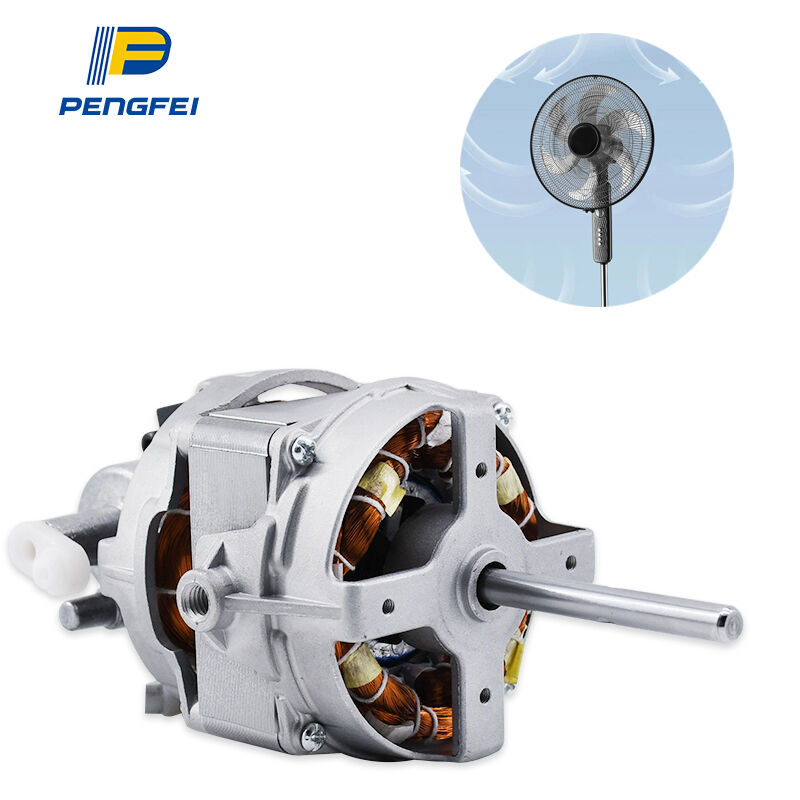
Why Refrigerator Fan Motor Reliability Directly Impacts Cold Storage Uptime
The -25°C to +5°C Operational Stress Test: How Fan Failure Triggers Cascade Downtime
The fan motors inside refrigerators face serious challenges from the constant temperature swings between minus 25 degrees Celsius and plus 5 degrees Celsius. These conditions make metal parts shrink while regular lubricants get too thick, which puts extra strain on the moving parts. When one motor stops working properly, it messes up the air circulation pattern and creates hot spots in different areas. As a result, the compressors have to work harder than normal, using about 15 to maybe even 20 percent more electricity and causing frost to build up faster than usual. Within just a few hours, all this ice starts creating pressure problems throughout the system. Eventually these issues lead to either compressor breakdowns or overloaded defrost systems. According to various studies done by thermal engineers, around three out of every four major system failures actually begin with a simple motor problem that gets worse until temperatures across the whole facility become dangerously unstable.
Field Data Spotlight: 68% of Unplanned Cold Room Outages Linked to Refrigerator Fan Motor Degradation (2023 ASHRAE Survey)
According to a recent ASHRAE survey looking at 412 cold storage facilities across the country, about two thirds of all unexpected power failures actually come down to problems with refrigerator fan motors. These motors are responsible for keeping temperatures stable inside these facilities. When things go wrong, bearing seizure accounts for roughly 42% of breakdowns while cracks in winding insulation make up around 31%. Both issues get worse over time because of corrosion caused by moisture buildup during regular defrosting processes. Facilities that didn't use special lubricants designed for extremely low temperatures saw nearly three times as many outages compared to places with properly engineered cold weather solutions. The bottom line? For every 10 percent improvement in motor reliability, companies tend to lose about 14 percent fewer products due to spoilage. That makes a real difference in operational costs and food waste prevention efforts.
Low-Temperature Durability: Materials, Lubrication, and Bearing Integrity for Refrigerator Fan Motors
Lubricant Phase Transition & Bearing Seizure: The Hidden Failure Mode Below -18°C
When temperatures drop below -18°C, regular greases start changing their properties in ways that really hurt refrigerator fan motors. The grease gets much thicker suddenly, almost turning partly solid and losing its ability to flow properly. This means the bearings don't get enough lubrication anymore, which creates dangerous metal rubbing against metal situations inside the motor. According to some research published in Machinery Lubrication, these conditions can actually triple the amount of torque needed for operation, often resulting in seized bearings and complete motor breakdowns. For those working with equipment in extremely cold environments, synthetic lubricants that work down to around -40°C or colder are essential. These special greases keep flowing smoothly even when it's freezing outside, forming protective films on components that stop most of these failures from happening at all.
Material Embrittlement Mapping: ABS vs. PBT Housings at -30°C (Underwriters Laboratories 60335-2-80 Validation)
Polymer selection is decisive for fan motor resilience in ultra-low-temperature environments. UL 60335-2-80 validation testing at -30°C reveals stark performance differences:
| Property | ABS Housing (-30°C) | PBT Housing (-30°C) |
|---|---|---|
| Impact Strength | 2.1 kJ/m² (79% reduction) | 7.8 kJ/m² (22% reduction) |
| Elongation at Break | <3% | 18% |
| Crack Propagation Risk | High | Negligible |
PBT’s crystalline structure preserves ductility and impact resistance at -30°C, enabling it to absorb thermal contraction stresses without fracturing. This prevents housing disintegration—an event that exposes internal motor components to moisture, contaminants, and accelerated corrosion.
Ingress Protection and Condensation Resilience in Refrigerator Fan Motor Design
IP55 vs. IP68 in Frost-Cycle Realities: Why Ingress Protection Alone Doesn’t Guarantee Longevity
IP ratings measure how well equipment protects against dust and water, but they miss some key issues when it comes to frost cycle environments. Take IP55 for instance, which stops dust and handles low pressure water spray. IP68 goes further with complete dust protection and can handle being submerged continuously. However, things get complicated in cold storage facilities where temperatures swing back and forth between minus 25 degrees Celsius and plus 5 degrees. These temperature changes create condensation freeze cycles that slowly wear down seals. Even equipment with top IP ratings isn't immune to microscopic water getting inside, forming ice that damages bearings and motor windings over time. Industry reports indicate around 40 percent failure rate among IP68 rated motors after just three years in areas prone to frost problems because of this condensation related corrosion. For real long term performance, manufacturers need to incorporate additional moisture control measures beyond standard IP protection. Solutions include hydrophobic coatings inside components, pressure equalizing breathers, and using materials resistant to corrosion.
Energy Efficiency and Service Life: AC vs. DC Refrigerator Fan Motors Compared
DC Brushless Motors: 42% Lower Standby Power Draw & 3.2× Mean Time Between Failures vs. AC Induction (DOE 2024 Benchmark)
For cold storage facilities running nonstop operations, DC brushless motors really stand out when it comes to efficiency and dependability. According to some recent data from the US Department of Energy in their 2024 report, these motors actually use about 42 percent less standby power compared to traditional AC induction motors. They do this thanks to those fancy electronic commutation systems and permanent magnets that cut down on energy waste when speeds change. What makes them even better is how much longer they last between breakdowns. We're talking roughly three times the lifespan before failure occurs. That's because there are no brushes or commutators to wear out over time. All that means less heat buildup inside the motor housing, which helps protect the insulation around the windings and keeps bearings from seizing up in freezing temperatures. Sure, the initial investment might be steeper than other options, but most operators find that the money saved on electricity bills plus all the repair work not needed typically pays for itself somewhere between two and three years after installation.
FAQs
Why is fan motor reliability crucial for cold storage facilities?
Fan motor reliability is crucial because it directly affects temperature stability, compressor workload, and overall energy efficiency. Motor failures can lead to increased electricity use, frosting issues, and potential system breakdowns, threatening product quality and increasing operational costs.
What types of lubricants are recommended for refrigeration fan motors operating in low temperatures?
Synthetic lubricants that remain effective down to -40°C or colder are recommended. These lubricants maintain their flow properties in extreme cold, ensuring components remain protected and operational.
Why are PBT housings preferred over ABS in ultra-low temperature environments?
PBT housings have better impact strength, elongation at break, and resist crack propagation compared to ABS, making them more durable and effective in withstanding thermal contraction stresses at temperatures as low as -30°C.
What are DC brushless motors and how do they benefit cold storage operations?
DC brushless motors use electronic commutation and permanent magnets, providing higher efficiency by reducing standby power consumption by around 42% and offering a lifespan approximately three times longer than AC induction motors. This translates to cost savings on energy and maintenance.
Table of Contents
- Low-Temperature Durability: Materials, Lubrication, and Bearing Integrity for Refrigerator Fan Motors
- Ingress Protection and Condensation Resilience in Refrigerator Fan Motor Design
- Energy Efficiency and Service Life: AC vs. DC Refrigerator Fan Motors Compared
-
FAQs
- Why is fan motor reliability crucial for cold storage facilities?
- What types of lubricants are recommended for refrigeration fan motors operating in low temperatures?
- Why are PBT housings preferred over ABS in ultra-low temperature environments?
- What are DC brushless motors and how do they benefit cold storage operations?