 EN
EN

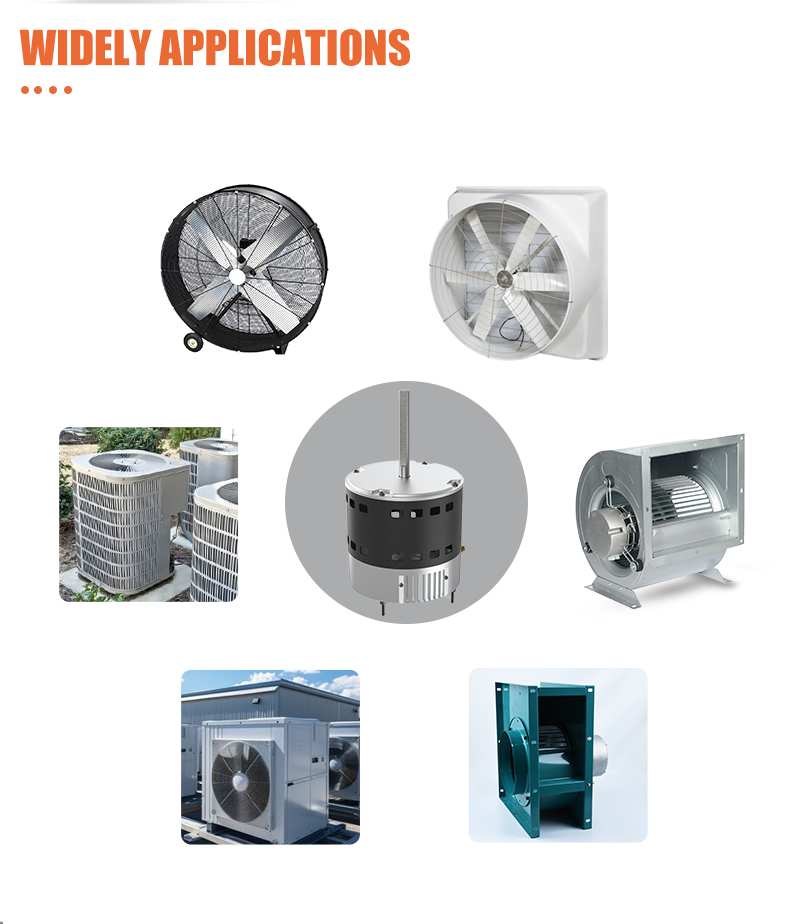
Understanding Key HVAC Motor Specifications for System Compatibility
Essential Motor Specs (HP, Voltage, RPM, Phase) and Their Role in Matching Performance Needs
When picking out an HVAC motor, there are really four main specs to consider. Horsepower basically tells us how much torque we can expect from the motor. Voltage matters because it needs to match what's available in the building's electrical system. RPM affects how fast the fans will spin, which impacts airflow throughout the space. And then there's phase – whether it's single or three phase – this makes a big difference in how stable the power supply stays during operation. According to industry data from last year, HVAC systems running with correctly sized motors tend to be around 15 to 22 percent more efficient compared to those where the motor doesn't fit right. Going too big on horsepower just wastes electricity since extra torque isn't needed most of the time. Getting the voltage wrong can actually shorten motor life significantly, especially in places where humidity levels run high. We've seen cases where improper voltage caused insulation issues developing up to 40% faster than normal under these conditions.
How Motor Specifications Impact Overall HVAC Efficiency and Energy Use
Getting the RPMs just right helps avoid those pesky airflow problems that actually account for about 12% of all wasted cool air in homes. When it comes to commercial applications, three phase motors really shine with their impressive 94% efficiency rate. That's way better than the 84% we see from single phase models. The difference adds up too - businesses saving anywhere between $180 to $420 each year on a standard 10 ton system. And let's not forget about voltage fluctuations either. Even minor changes of plus or minus 10% can push motor temps up by a full 18 degrees Fahrenheit. This kind of temperature spike makes thermal overloads much more likely when everyone is cranking up their AC during heatwaves.
Data Insight: Energy Losses from Mismatched Motor Specs in Residential Systems
Over 35% of U.S. homes use HVAC motors with incorrect specifications, resulting in $740 million/year in preventable energy waste (DOE 2023). Common mismatches include:
| Specification Error | Energy Penalty | Cost Impact (Annual) |
|---|---|---|
| +20% Oversized HP | 14% | $160 |
| RPM Mismatch | 9–18% | $90–$210 |
| Wrong Voltage | 22% | $250 |
These errors are most prevalent in older systems, where 68% of motors exceed their recommended service life by four or more years.
Matching Blower Motor Types to Ventilation Equipment for Optimal Efficiency
Comparison of single-speed, multi-speed, and variable-speed motors in airflow control
Modern HVAC systems rely on three primary blower motor types to balance performance and efficiency:
- Single-speed motors run at full capacity constantly, consuming 15–20% more energy than variable-speed models (ASHRAE 2023)
- Multi-speed motors offer 2–3 preset speeds, improving efficiency during partial-load conditions
- Variable-speed motors adjust airflow dynamically, delivering up to 40% energy savings through precise RPM modulation
| Motor Type | Speed Control | Energy Efficiency | Typical Applications |
|---|---|---|---|
| Single-speed | Fixed (100% capacity) | 65–70% | Basic residential systems |
| Multi-speed | 2–3 preset levels | 75–82% | Zoned climate control |
| Variable-speed | Continuous adjustment | 90–95% | Commercial/High-end HVAC |
ECM motors: Advantages in efficiency and precision for modern HVAC systems
Electronically Commutated Motors (ECMs) represent the leading edge in HVAC motor technology, using brushless DC design to deliver 30% lower energy consumption than traditional PSC motors according to the 2024 HVAC Motor Technology Report. Key advantages include:
- Microprocessor-controlled speed adjustments with ±1% airflow accuracy
- Soft-start functionality that reduces mechanical stress
- Native integration with smart thermostat protocols
ECMs maintain over 90% efficiency across 20–100% load ranges, making them ideal for systems with fluctuating demands. Their sealed construction also limits contamination, enhancing reliability in sensitive environments like hospitals and labs.
Ideal applications of different blower motors across system designs
Motor selection should align with operational needs and infrastructure:
- Single-speed: Budget retrofits in mild climates with low runtime demands
- Multi-speed: Older systems needing moderate efficiency improvements
- Variable-speed/ECM: New installations paired with inverter-driven compressors
- High-torque models: Commercial setups moving air through extended duct runs (>100 ft)
Variable-speed motors deliver the best return in regions exceeding 4,000 annual cooling hours, typically paying back within 3–5 years. In industrial settings requiring steady airflow, ECMs combined with VFD-driven fans cut maintenance costs by 60% compared to standard induction motors.
Ensuring Physical and Mechanical Compatibility During Installation
Common Dimensions and Mounting Configurations in Residential and Commercial HVAC Motors
Residential motors typically range from 6–12 inches in diameter with standardized NEMA 48/56 frames, while commercial units often exceed 18 inches and use rigid flange or face-mounted configurations. Key differences include:
| Feature | Residential Motors | Commercial Motors |
|---|---|---|
| Frame Type | Rigid base | Bolt-on brackets |
| Shaft Orientation | Horizontal (90%) | Vertical/Horizontal |
| Clearance | 2–4 inches | 6–12 inches |
Misalignment beyond 0.002 inches causes premature bearing wear, contributing to 34% of motor failures in HVAC system audits (2023). Always verify bolt patterns and service access against manufacturer specs to avoid airflow restrictions.
Avoiding Installation Errors Due to Size or Mounting Mismatches
Research from 2022 found that about 28 percent of all HVAC system inefficiencies come down to motors that are just too small for the job, making them work harder by spinning faster than they should. Take for instance when someone installs a third of a horsepower motor to run a 400 cubic feet per minute blower. That setup actually consumes around 18% extra power compared to what it would take with the right sized motor installed properly. When adjusting belts, make sure there's between fifteen to twenty pounds of pressure needed to push down one inch of the belt length. Also check how aligned those pulleys really are since misalignment creates unnecessary noise levels above sixty five decibels which nobody wants near their living space. Always double check those motor name plates against what kind of electricity supply the equipment needs. Mixing up 208 volts with 240 volts can lead to serious problems like overheating components in systems that handle both gas and electric sources at once.
Evaluating the Impact of Motor Selection on Performance and Operating Costs
How Motor Efficiency Affects Energy Consumption and Utility Bills
Switching to high efficiency motors can cut down energy consumption anywhere from 10% all the way up to 30% when compared against regular models. For instance, if someone replaces a standard 50 horsepower motor with an IE3 rated one running non stop for cooling purposes, they'll actually save around three thousand three hundred dollars each year just on their electric bill alone, assuming the rate is ten cents per kilowatt hour. The money saved comes mainly because these better motors generate less heat and have fewer electromagnetic losses too. Plus there's another benefit nobody talks about much but it really matters: those lower operating temperatures mean smaller spikes in power usage that show up as extra charges on monthly utility statements.
Noise Levels and Comfort Implications Across HVAC Motor Types
ECM and variable-speed motors operate 8–12 dB quieter than single-speed units, eliminating disruptive cycling noises in homes and offices. This consistent operation supports stable humidity control, enhancing both comfort and indoor air quality.
Trend Analysis: Rising Adoption of Variable-Speed Motors for Long-Term Savings
Variable-speed motors now make up 42% of new HVAC installations, up from 28% in 2020. By adjusting airflow between 40–100% capacity, they save 1,200–2,500 kWh annually in mid-sized homes compared to fixed-speed alternatives.
Cost-Benefit Debate: High Upfront Investment in ECM Motors vs. Lifetime Savings
| Factor | AC Motor | ECM Motor |
|---|---|---|
| Initial Cost | $300–$600 | $800–$1,200 |
| Annual Energy Cost | $180 | $95 |
| Lifespan | 8–12 years | 15–20 years |
Though ECM motors cost 60–100% more upfront, their brushless design and integrated controls yield a 7-year payback through energy savings and reduced maintenance. Industry experts advise assessing total cost of ownership rather than initial price for systems operating over 3,000 hours annually.
Aligning HVAC Motors with Furnace and Air Handler System Requirements
Compatibility Between Blower Motors and Common Furnace Types
For blower motors to work right, they need to fit properly with both gas furnaces and heat pump systems. HVAC engineers have found that about 8 out of 10 problems with motor and furnace performance come down to torque profile mismatches. Most homes today use direct drive motors (around 91%) because these provide roughly 35% better airflow consistency compared to older belt driven versions, plus they operate much quieter too, cutting down on noise by nearly 60%. When everything lines up correctly, heat spreads throughout the house more evenly and homeowners typically save between 15% to almost 30% on their yearly energy bills for forced air heating systems.
Performance Expectations for Motors in Various Air Handler Setups
Variable-speed motors maintain ±3% static pressure accuracy across air handler configurations, preserving duct integrity in homes over 2,500 sq ft. ECM technology enables a 4:1 turndown ratio, allowing fine-tuned humidity management without the wear associated with frequent cycling. In zoned systems, these motors achieve 22–26% annual energy savings versus single-speed alternatives.
Following Manufacturer Guidelines and Industry Standards for Integration
Compliance with AHRI Standard 1210 ensures minimum airflow efficiency, while UL 347 certification confirms electrical compatibility with modern furnace controls. Professional installation requires verifying:
- Shaft diameter tolerances (±0.002")
- Mounting plate load capacity (≥150% of operational weight)
- Control voltage matching (24V vs 120V systems)
Cross-referencing torque-speed curves with equipment specs prevents 90% of premature failures due to mechanical mismatch.
FAQ
What are the primary specifications to consider when choosing an HVAC motor?
The primary specifications to consider are horsepower (HP), voltage, revolutions per minute (RPM), and phase (single or three-phase) as they determine the motor's compatibility with the home's electrical system.
How do mismatched motor specifications affect energy consumption in residential systems?
Mismatched specifications, such as incorrect voltage or oversized horsepower, can lead to increased energy consumption and reduced efficiency, contributing to preventable energy waste.
What are the advantages of ECM motors in HVAC systems?
ECM motors offer up to 30% lower energy consumption, microprocessor-controlled speed adjustments, soft-start functionality, and integration with smart thermostat protocols, providing high efficiency and precision.
Table of Contents
- Understanding Key HVAC Motor Specifications for System Compatibility
- Matching Blower Motor Types to Ventilation Equipment for Optimal Efficiency
- Ensuring Physical and Mechanical Compatibility During Installation
- Evaluating the Impact of Motor Selection on Performance and Operating Costs
- Aligning HVAC Motors with Furnace and Air Handler System Requirements